from friday 31 July till mercoledì 7 ottobre 2026
exhibit
"ASTRATTO ORGANICO": mostra dedicata ai protagonisti della scultura del Novecento a 40 anni dalla scomparsa di Henry Moore
 Art & photography
 Cultural
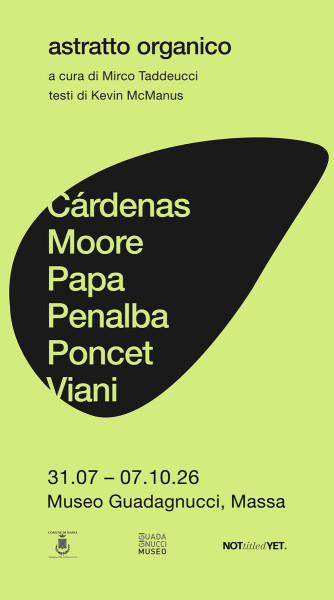
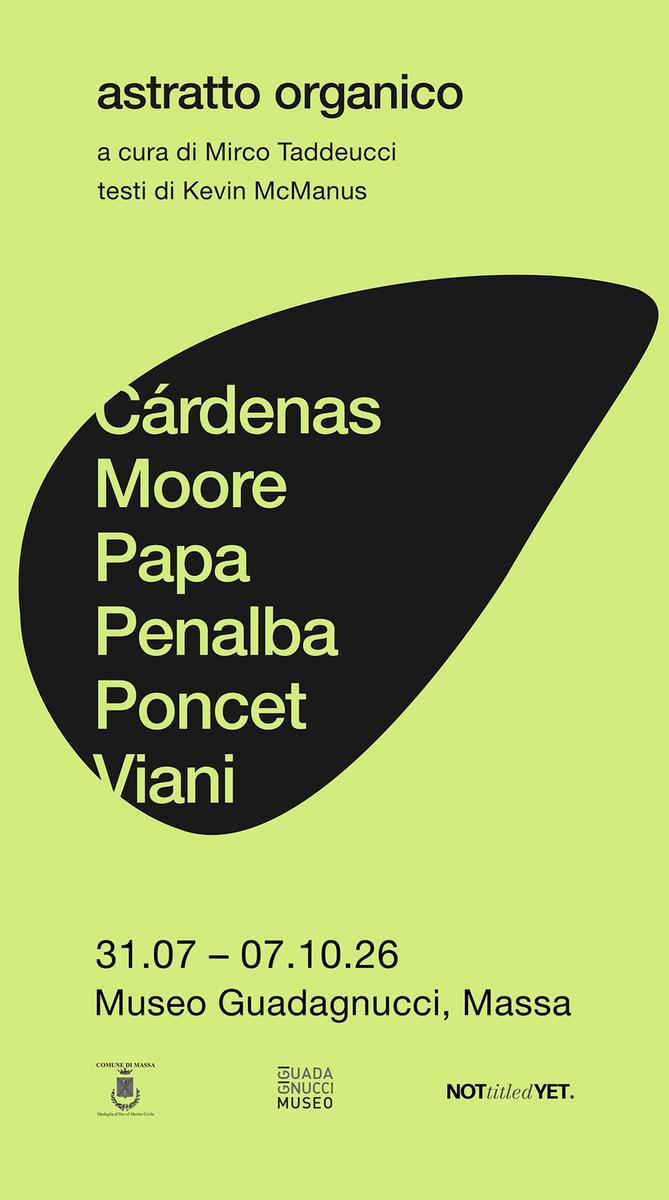
Following the great success of the exhibition “Gigi Guadagnucci Gio’ Pomodoro, Conversation on Nature,” held in 2025 at the Gigi Guadagnucci Museum, the Municipal Administration of Massa continues with the intent to build a long-term project aimed at a high-quality cultural offering. In this context, the Museum and Villa Rinchiostra reinforce their role as a national and international reference point by announcing a new in-depth exhibition on the sculpture of the late 20th century: “Organic Abstract” curated by Mirco Taddeucci and featuring critical texts by Kevin McManus, organized on the occasion of the fortieth anniversary of Henry Moore's passing. The project will showcase works by Henry Moore, Agustin Càrdenas, Antoine Poncet, Alberto Viani, Alicia Penalba, and Maria Papa Rostkowska and will open to the public on Friday, July 31, at 6:30 PM, remaining accessible to visitors until October 7, 2026.
The Mayor of Massa, Francesco Persiani, states: “With ‘Organic Abstract,’ we continue the path that the Municipal Administration has chosen to take in strengthening the role of the Gigi Guadagnucci Museum and Villa Rinchiostra as central places of the city's cultural life, but with an appeal that extends much further. After last year's exhibition, we reaffirm our commitment to building a program of quality capable of bringing international projects to Massa while simultaneously enhancing the deep artistic vocation of our territory. The museum is not just a space for preservation, but a vibrant place, open to citizens, schools, and visitors, capable of generating knowledge, participation, and new opportunities for cultural growth.”
The selection of these great artists is not random. First in France and then in Italy, Gigi Guadagnucci came into contact with some of the greatest contemporary masters during a season of great vitality for world sculpture, which often found itself at the foot of the Apuane Alps, a crossroads of tradition and modernity. What unites them is not only their connection to the Tuscan territory but also a conception of form that finds its origins in nature: a generative force from which volumes, tensions, cavities, and rhythms emerge, leading sculpture toward abstraction.
Henry Moore, who received the commission for Reclining Figure destined for the UNESCO headquarters in Paris in 1956, arrived in Versilia the following year, establishing a deep relationship with Tuscany. From Henraux to Il Bisonte in Florence, up to the historic exhibition at Forte Belvedere in 1972, this connection would accompany some of the most significant moments of his presence in Italy; Antoine Poncet, who found in the Apuan marbles the ideal material for a sculpture founded on the balance between abstraction and purity of forms; Alicia Penalba, with a dynamic exploration where volumes inspired by the plant world open to space through thrusts and continuously transforming structures; Alberto Viani, capable of leading the figure towards essential and biomorphic forms, suspended between body and abstraction; Augustín Cárdenas, who developed a sculptural exploration in the Versilia workshops where nature and imagination merge into archetypal and vibrant forms; Maria Papa Rostkowska, a representative of the Nouvelle École de Paris, one of the first women to establish herself in the post-war marble sculpture scene in Versilia, developed research based on the organic synthesis of forms.
The exhibition features 33 works, of which 4 are unpublished, by the 6 internationally renowned sculptors, tracing a path where volumes once again breathe in a concrete and poetic experience. The exhibition allows one to observe the relationship between form and space as the poetic core of the abstract-organic sculpture of the post-war period, creating an experience that can put artists from different origins and cultures in dialogue—from the United Kingdom to Argentina, from Switzerland to France, from Italy to Cuba and Poland. The materials of the works on display are equally diverse, ranging from stone and bronze to plaster sketches, painting, collage, and preparatory drawings, juxtaposing sculpture with its design and highlighting the creative process of the work “in progress.”
All the works converge around the idea encapsulated in the title of the exhibition: an abstraction that gives life in essential form, where curves, cavities, and caresses of light and shadow become the language of an internalized nature. The artists involved outline an international panorama where the sculptural form sheds its weight and seems to belong to a poetic geology that is both modern and ancestral.
M. Papa Rostkowska, Poisson, 1985, Persian green onyx, ph. Diane De Polignac The curator Mirco Taddeucci states: “The sculpture of the 20th century does not proceed solely through formal ruptures but rather through a slow transformation of the very concept of figure. After the crisis of the monument and mimetic representation, the body, nature, and the object do not disappear: they are reduced to plastic nuclei, primary structures, suspended presences between abstraction and recognizability. Organic Abstract investigates this transition through the works of Henry Moore, Agustín Cárdenas, Alicia Penalba, Antoine Poncet, Alberto Viani, and Maria Papa Rostkowska. The title encompasses two seemingly opposing drives: the distancing from the figure and the persistence of the living. It is precisely from this tension that a decisive part of the sculpture we observe in the exhibition arises: not from mimesis, but from the ability to recognize in the human body, in the animal and plant world, in bones, wings, seeds, shells, or human profiles a source of formal energy. Abstraction does not deny the real: it concentrates it, bringing it to a more essential threshold. The stone then holds the rhythm of a curve, the opening of a cavity, the weight of a mass that becomes an organism, an active memory of the living within the form.”
THE PATH AND THE ARTISTS
The exhibition unfolds around the primary visual and formal sources that, throughout the 20th century, have nourished abstract-organic sculpture: the plant and animal world, the human body, natural structures, and the relationship between mass, surface, and internal space.
The route begins outside with Fugue Lacustre, a monumental marble sculpture by Antoine Poncet, positioned as the ideal threshold of the exhibition and in chromatic dialogue with the color of the Villa Rinchiostra facade. The work introduces some of the central themes of the exhibition: the reduction of natural form to essential plastic structure, the continuity of surfaces, and the relationship between material weight and dynamic thrust.
Inside, the itinerary does not proceed according to a rigid chronological order but through thematic nuclei. The first rooms highlight the transition from natural suggestion to autonomous form: from the ascending, winged vegetal structures of Alicia Penalba, exemplified by Cinq Ailes, to the animal synthesis of Maria Papa Rostkowska in Poisson. In the first case, the reference to the wing does not have descriptive value but becomes a plastic principle built on vertical thrusts that articulate in space. In the second case, the animal form is condensed into an essential and compact plastic presence.
Among the exhibits are also an unpublished collage and a small bronze by Alicia Penalba. Next to her, Maria Papa Rostkowska, who crossed paths with Guadagnucci in the Apuan area, testifies to a different relationship with nature. The presence of a canvas never exhibited allows for a broader reading of her work beyond sculpture.
The room dedicated to Alberto Viani introduces the theme of the human body as the nucleus of a progressive plastic synthesis. In his nudes and torsos, the figure is not denied by abstraction but transformed into an autonomous formal organism. Nude in the Sun particularly expresses this tension: a body not reproduced through anatomical detail but through the continuity of surfaces, the balance of volumes, and the direct relationship with space.
The largest section of the exhibition is dedicated to Henry Moore, whose presence constitutes one of the central moments of the path. Through studies on paper and sculptures such as Draped Reclining Figure, the exhibition documents some of the fundamental themes of his research: the human figure, the tension between mass and cavity, the dialogue between anatomy, landscape, and natural forms.
The motif of Reclining Figure is not only a recurring iconographic theme but a device through which the artist explores the relationship between body, space, and plastic structure. In the room, the studies on paper allow for tracing the process through which forms take shape before their sculptural translation alongside different bronzes. The works and documents on display recall the artist forty years after his passing and underline his relationship with Tuscany and the Apuane-Versilian area: a bond established in 1956 with the commission of Reclining Figure for the UNESCO headquarters in Paris, whose seventy-year anniversary coincides with this exhibition, and strengthened by the subsequent work at Henraux and Il Bisonte.
The path concludes with Agustín Cárdenas, a Cuban artist trained in Havana and active in Paris since the mid-1950s. His presence takes the theme of the organic towards a more archaic and concentrated dimension: bodies, totemic signs, and natural memories translate into essential and elongated profiles, in which cavities and openings contribute to the construction. The exhibited plasters, including a sketch never before shown to the public, allow us to glimpse the moment when the idea becomes clearer before transitioning to marble, bronze, or wood. The conclusion entrusted to Cárdenas thus makes explicit another outcome of the exhibition: no longer nature as a recognizable model but as a generative principle of synthetic and animated presences.
For more information: https://www.museoguadagnucci.it/
|
from friday 31 July till mercoledì 7 ottobre 2026
City: Massa
Venue: Via dell'Acqua, 175
vari orari
paying entrance
prezzi vari
Info. 0585490204
|
| |
|
|
45 views

 Massa
Massa
 0585490204



















 Share
Share Add to your calendar